
“In our time none has the conception of what is great. It is up to me to show them”
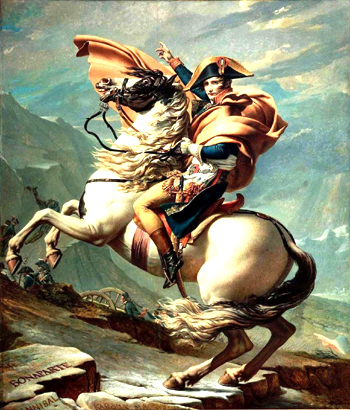
Revolutionist, brilliant military strategist, fearless solider, charismatic speaker, tyrant, all of these words could be used to describe the life of the French emperor Napoleon Bonaparte. One thing that is undeniable is that Bonaparte was an astounding leader. This Corsican born soldier who was teased as a child for not being able to speak proper French, showed fearless determination on the battle field and an extraordinary ability to lead people which enabled him to raise to become the of emperor of France by the age of 34.
Standing only 5’2”, Napoleon was both admired and feared throughout Europe during his reign. On his first battle as Commanding general, one of his generals to said to his colleague, “I don’t know why, but the little bastard scares me.” His leadership style was considered unorthodox at the time but today we see that he had all of the major and minor characteristics that make a brilliant leader.
“I don’t know why, but the little bastard scares me.”-Unnamed French General
Win Their Trust and Loyalty
Napoleon was a great motivator of people. From the lowest soldier to the high ranking generals and aristocrats, Bonaparte knew that in order for him to succeed he had to have the people around him enthusiastic about their mission. He understood that a leader must win the trust of the people he is leading. His first time as commanding general was a testament to the leadership capabilities he possessed. His soldiers were in no condition to win any battles because they had been lead by incompetent leaders and were ill kept. To add insult to injury, they hadn’t been paid for their services in months since the country was almost broke at the time. When Napoleon arrived he changed everything.
“Soldiers, you are naked and ill fed. No fame shines upon you. I will lead you to the most fertile planes in the world…you will find there honor, glory and riches.”
He first won the trust of his generals and then the loyalty of his soldiers by promising them victory and glory. He was a very charismatic speaker and knew exactly how to motivate people. He also understood that it is beneficial to win the trust of those he is not leading. After victories in Austria, Piedmont and Prussia, he would enter the major cities of those countries and win the hearts and devotion of many of the people by declaring that he was a representative of the Revolution. He would announce that he has no quarrels with the people but with the tyrants who have oppressed them. This ability to influence people was a major key to his success.
As a leader: Be aware of the thoughts and feelings of those around you. Begin to learn how to persuade people to believe in your cause and adapt to your thinking. If you are confident in your ability to succeed they will begin to believe in that same ability.
Napoleon’s army not only fought for France, but they were entirely devoted to their commanding general and emperor thus making them almost impossible to stop. When the people you are leading are not only devoted to the cause, but also loyal to you, there is a heightened enthusiasm and effort that is put into the work.
Do Things Differently
As a leader of armies and an emperor, Napoleon was always employing new ways to make things work. On the battle fields, most of the opposing armies where perplexed but his military strategies. They didn’t know what to do to combat his maneuvers and formations. He also would fight at odd times of the day, consecutive days, in the snow, rain, sun, night, or whenever he believed he would have an advantage.
One great example of his ability to think differently was during the Battle of the Pyramids in Egypt. He was to face the Mamluks, an army of fearless and efficient Islamic killers. During this battle, Napoleon had his soldiers line up in a big hollow square formation with the artillery and supplies in the center. The army then proceeded to rotate as the Mamluks attacked. This enabled his army to pick them off with unbelievable efficiency. The French were outnumbered 20,000 to 60,000. During that particular battle the Mamluks lost 6,000 men, the French 30.
As a Leader: Begin to think about different ways to approach a job or task. No matter how badly they were outnumbered, the soldiers in Napoleon’s army knew that Napoleon would find a new and clever way that would lead to victory. As a leader you should be on the lookout for new ways to do the same task.
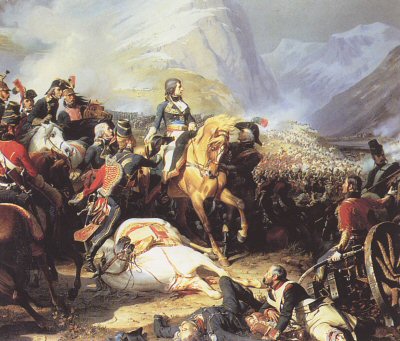
“They sent a young madman to attack day, night, front, and rear. It’s an intolerable way to make war”-Piedmonte Soldier
Thank Those Who Have Helped You Succeed
All employees, workers, and soldiers want to feel appreciated. Napoleon understood that showing gratitude was a great way to gain the favor of the people. During his first military victory as a commanding general at Piedmonte, Napoleon would be seen as a generous leader. His army performed exceptionally well during those battles. It only took 2 weeks before the Piedmonte army realized they’ve had enough. After Piedmonte surrendered, He demanded gold and silver. Then he paid his soldiers using the gold and silver he obtained. This was the first real money the soldiers had seen in months.
Napoleon knew that if the soldiers felt appreciated they would perform with an intense sense of duty to their country and leader. To reward me of accomplishment, Bonaparte also created the Legion of Honor. He would also encourage soldiers in other ways. While he was making his rounds through the military he would say to a general,
“Who is the bravest man in this battalion?”
The general would select the bravest man and Napoleon would take a medal off of his own coat and pin them on to the selected man. Can you imagine how that would spread through the camps?
As a Leader:Be willing to show gratitude often and in abundance to those you lead. Say “thank you” and present rewards and gifts, to show you appreciate those who are helping you succeed. It is also a surefire way to keep the respect and admiration of your people. The lack of gratitude in many people leads to discontent of their job and disgruntle behavior. As a leader, it is your responsibility to recognize those around you who are doing their job well. Your success depends on how well they perform. From time to time let them know how much you value their effort and how much they mean to your organization.
Get your Hands Dirty
Even though it was unheard of, Napoleon was often doing the things during a battle that were the responsibilities of the lieutenants and the generals below him. With his troops facing direct fire, he was in the thick of it. He had cannon balls nearly taking his head off. He would be down there loading cannons which was a corporal’s job. He was wherever he was needed.
Usually when the battles were over and the opposing army’s guns fell silent, Napoleon would rise up sweaty, dirty and covered in gun powder. This won the respect of the men around him. They felt that he was one of them, that he really cared about what he was fighting for. He knew everyone else’s job and would take on task that he could have easily delegated to someone else. Even though he was emperor he never lost sight of his responsibility to get the job done.
As a Leader: You should never think that a job is beneath you. The privilege of being able to tell others what to do should not be abused. When all a leader does is shout orders from their high and mighty place, it makes them appear out of touch with the people they are leading.
That approach to leadership never results in loyalty because the employees feel as though the person in charge never really does any work. But if you take the Napoleon, hands on approach, you can connect with the people you are leading on an intimate level. Knowing that your boss is willing to jump in and help out when you need it as opposed to judging you if you aren’t able to handle it, is very reassuring. As a leader, learn to participate in the work of those you lead.
Leadership Mistakes
Losing Confidence
Throughout his life Napoleon believed he was destined for greatness. This confidence in his destiny made it possible to overcome any and all obstacles. But after being defeated in the War of the Sixth Coalition he was exiled to an island called Elba. While on Elba he ran the island like a little country. He opened mines, started a little navy and army, and helped farmers improved their land. None of this compared to his reign as emperor of France. With France going through turmoil and rumors that he might be relocated to a small island in the Atlantic, Napoleon snuck back into France. Louis XVIII sent the 5th regiment to stop Napoleon and his followers when he got to the mainland.
Napoleon approached the regiment alone and shouted, “Fifth, you recognize me. If any man would shoot his emperor, he may do so now.” There was a brief silence. Then the soldiers shouted, “Vive L’ Empreuer!” Napoleon was back in power. But he wasn’t the same confident man that once ruled most of Europe.

“I felt that fortune was abandoning me. I no longer had the feeling that I was sure to succeed.”-Napoleon speaking about his defeat at Waterloo
Perhaps the loss to the Russians in the War of the Sixth made him realize that he was not invincible. He was too careful about the strategies he implemented and didn’t have the same confidence he had during earlier wars. This lack of confidence trickled down to the soldiers and eventually lead to his defeat.
As a Leader: If your confidence is shaken, theirs is shattered! The leader sets the tone for the entire organization. Having a true belief in your ability will be evident to those around you. No matter what setbacks, failures, or challenges you encounter, never lose confidence in yourself and in the people around you.
Silencing your People
Napoleon understood the power of media. There are many painting of Napoleon that he commissioned after every battle. He also wrote articles for a newspaper that he started. However, when he became emperor, he looked to silence the speech of those who opposed him. He was a big believer in equality and that every man should have the opportunity to raise and do great things like he did, but he had no tolerance for liberty. There were about 65 newspapers in France before Napoleon was in power; there were only 4 afterward.
As a Leader: It is important that you listen to everyone around you. Getting the thoughts, ideas, and opinions of other people is one of the best ways to learn. It is easy for leaders to lose sight of how effectively they are leading their people. If you silence or limit the amount of feedback you get from others about your leadership skills or how well you are doing your job, you stunt your ability improve in a direction that is beneficial to yourself and your organization.
Not trusting others
Napoleon would always have spies listening to the conversations of everyone in Paris. In the marketplace, salon, or café, wherever you were there was a spy. He did not trust many people and wanted to know at all times what was being said and what was going on.
As a Leader: Trusting and empowering people are great ways to build your organization. Once you trust the people around you to do what is necessary, you empower them to do more than they would have if you were over their shoulder watching their every move. Learn to give the people you lead some space and freedom.
Although Napoleon was a brilliant motivator of people and knew how to win loyalty, he made mistakes that leaders and potential leaders can learn from. When he advanced from First Counsul to Emperor, he became too powerful and that made him unable to trust others. At the time, he was the most powerful man in the world. Great leaders need to understand the having power requires using correct judgment when it comes to leading your people.
Like this Article? Get updates on new stuff!
 Subscribe for free today and get a FREE copy of my ebook The Path 2 Success. Begin your path today!