
Most people wonder endlessly about why their lives are the way they are. Being stuck in a job that they hate, staying in an unhealthy relationship, or never really achieving their purpose in life. These may be the results of living a life that lacks courage, individuality, and an unwillingness to aggressively pursue a better life. Instead of having the courage to face their adversities, question the direction their lives are headed in, and actively seek true success, they opt to wander the earth with no real ambition and a lack of purpose which leads them to be a victim of their own actions.
In the animal kingdom there is a food chain that has maintained itself since the beginning. What we don’t realize is that in our society there is also a food chain that we are a part of everyday. The chain is cloaked by our civilized society and no one gets eaten, but in some ways the effects are more brutal than a cheetah pouncing on a gazelle. The sad fact is that many of the people that are on the losing end of the food chain perpetuate their own status by their actions and who they choose to associate with.
Animal Characteristics
The people with the underlying helpless outlook on situations that they feel they have no control over, are clearly the prey. They present themselves as not being strong enough to effect the conditions around them and not courageous enough to stand up for themselves. So what happens? They get eaten. Those who wait for others to take action are living their lives like scavengers. They are the ones who may take action if and only if absolutely necessary but usually wait for others to take action first. The hunters are the ones who will go out and control their environment. They understand that in order to get what you want, you must gain instinct, timing, courage as well as the ability to risk what you have in order to get what you want.
There has been an ongoing debate in the past several years on whether the tyrannosaurus rex was a predator or a scavenger. It has long been assumed that because of the size of this monster, it was a predator. Well, many scientists are now refuting that assumption and finding that the T-rex has many scavenger characteristics. There seems to be a consensus now among experts and many agree that T-rex was and hunter but would not pass on an already dead meal.
All people possess hunter, scavenger, and prey characteristics. In order to make your way in this world sometimes you need to be a scavenger and sometimes you need to hunt. Learning when to take on certain characteristics is a valuable skill. Whenever I talk to people who complain about their job, I like to ask them what they are doing to change whatever it is that they are complaining about. Some may waive responsibility and point to the duties of someone else hoping that the next person will take action. Others will answer with a sense of helplessness. They are usually convinced that nothing will ever change and that they are at the mercy of the people that look at a similar situation and take action with the intent to enact change.
Flocks, Schools, and Prides
My father told me recently that his mom always told him to be careful who he surrounds himself with. She would always say, “You are who your friends are.” This is a passing idea for most of us. Most people enjoy hanging out with people like themselves. People who are the same age, race, have the same background, and who have the same interests are usually the people we are attracted to. If you are an antelope, you are going to attract other antelopes and lions. I sometimes question how much our unwillingness to look outside of our safety zone is affecting our ability to exceed our potential.
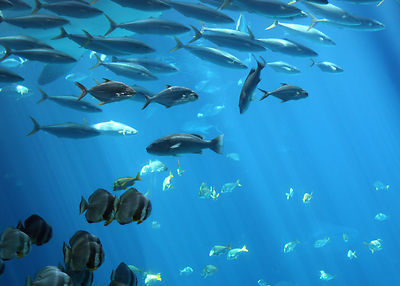
There is a different name given to different groups of animals. If you see a group of birds they are called a flock. A group of fish is called a school. And a group of lions is called a pride. This is not that much different than what we call a certain group of humans. Gangs, nerds, jocks, there is a name for any group of humans that are the same and associate with each other. Sometimes clear classifications of humans are easy if you look at the surface. But what I am presenting you is not just a look at what you do but an examination of who you are.
Who you choose to associate with is a reflection of who you are. Your friends, co-workers, and colleagues may be diverse in their race, age, or background but in order for you to coexist peacefully you must have something in common. You may have external differences but there are internal similarities. More times than not, the people around you have the same perception as you do. You provide something of value to them and they provide something of value to you. In a threatening situation, elephants will create a circle to protect a baby elephant or a weaker member of the group from danger. In the same way, perhaps, you choose to surround yourself with certain people for protection or security.
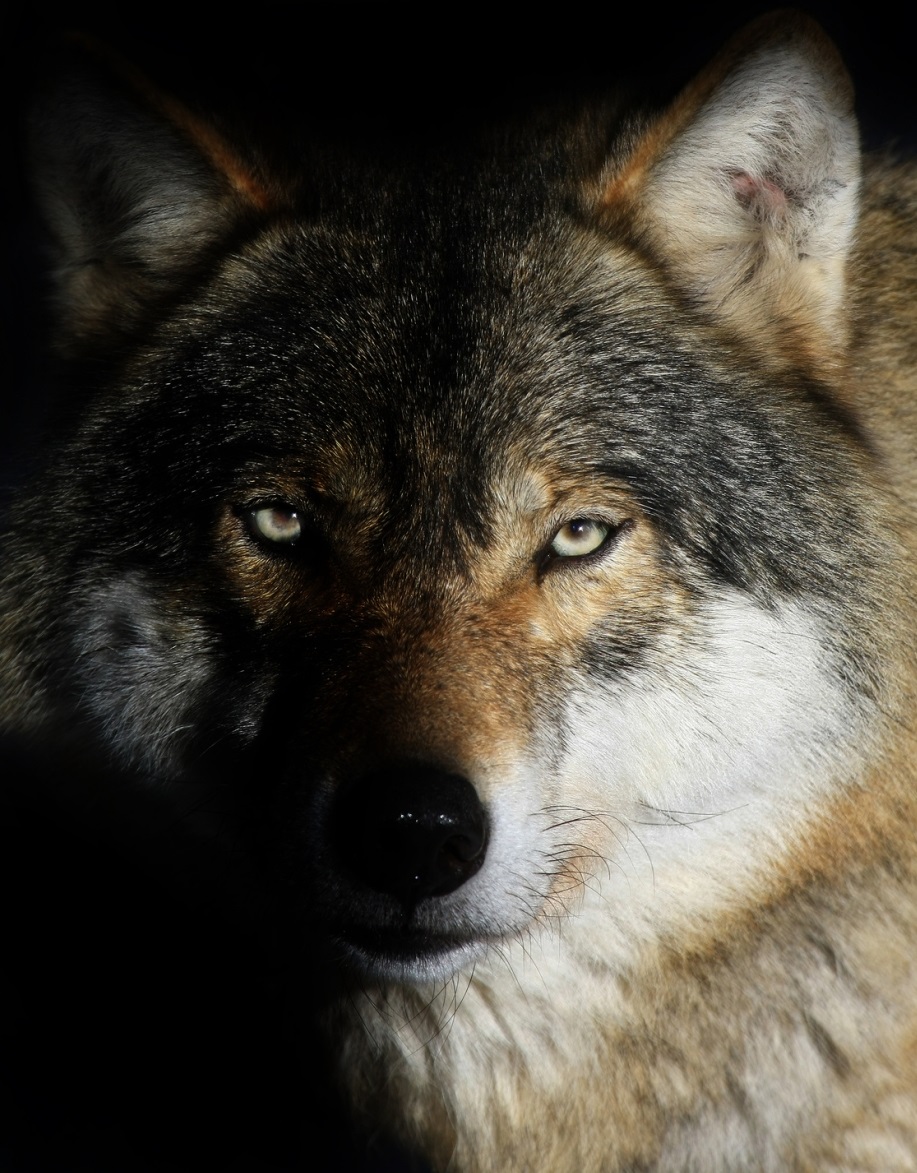
Take a good look at who you are and who you want to be. There needs to be a change in the group you are associated with if you conclude that there is no correlation between what they offer you and where you want to be. This doesn’t mean that you should “fire” your friends but it does mean you should be looking for people who will aide you in your progress. Wolves hunt in packs and successful people often associate with each other in order to reach a common goal. Find your pack and start hunting.
More Like Hunters
There is a time to be submissive and there is a time to be aggressive. The hunter mentality does not apply to all things in life. Submitting yourself to authority, a higher power, or leaders is often a positive thing. However, within that submission, there should be a readiness to act as a hunter when the occasion calls. In general, being passive about goals, desires, and your purpose is a huge mistake that so many people make everyday of their lives.
In order for you to truly control certain circumstances around you, there must be an increase in your hunter characteristics. When you learn to see situations, opportunities, and obstacles through the eyes of a successful predator, you will increase your chances of accomplishing your goals. Here are some characteristics of a good hunter.
Find your Habitat– Animals who are predators always develop and grow separately from their prey but they live in the same or adjacent habitat. Cheetahs, lions, tigers, share the same land as their food. Otherwise there would be no opportunity to hunt. You must find the habitat where you opportunities are.
If you are skilled at what you do but there is no room for advancement in your current position, you need to relocate to where the opportunities are. If you want to network and meet new people, then get out of the house and go where the people are. Simple concept, but the scavenger mentality prevents people from making that move because of hopes that the food will come to them.
Practice your pounce-Wolf pups often chase each other around pretending to hunt one another. This pretend hunting is actually training for when they are older and are responsible for capturing their own food. There is usually a set of skills needed in order to succeed at anything. Practicing those skills are vital. Being prepared for any situation or obstacle may be the difference maker.
Hunt for your life-Find that thing that you love and pursue it as if it is the one thing that sustains your life! The majority of people in the world are afraid to go after what they truly want because they are afraid of the possibility of rejection or failure. If a lion misses a kill, it doesn’t give up, it tries again. Hunters understand that if they don’t hunt, they don’t eat. Find that one thing that will truly satisfy you and go after it. The most successful people in the world are successful because they’ve found that one thing in their lives that is their “food”. They pursue it because they cannot imagine doing anything else with their lives. Find your “food” and chase it until you capture it!
If you enjoyed this post please share and comment!
Like this Article? Get updates on new stuff!
 Subscribe for free today and get a FREE copy of my ebook The Path 2 Success. Begin your path today!